Talking in Circles: Why Your Online Community Is Louder Than Ever But Less Connected Than You Think

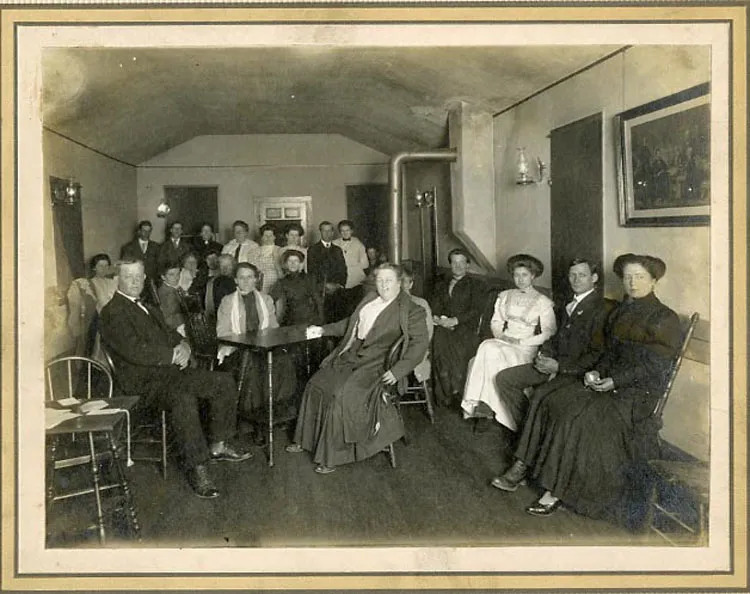
Photo: W. Atlee Burpee Company; Henry G. Gilbert Nursery and Seed Trade Catalog Collection, No restrictions, via Wikimedia Commons
Open any active online community right now and you'll find it. Hundreds of messages. Emoji reactions stacked three deep. Someone cracking a joke, someone else posting a hot take, a third person dropping a link nobody will click. The place looks alive. It sounds alive. And yet, if you sit with it long enough, something feels off — like standing in a crowded diner where everyone's talking but nobody's really listening.
This is the conversation trap. And if you've spent any real time in digital spaces — Discord servers, Facebook Groups, Slack workspaces, Reddit threads — you've probably fallen into it without realizing.
The Illusion of Engagement
Here's the uncomfortable truth: activity is not the same thing as connection. A community can rack up thousands of messages a week and still leave every member feeling vaguely unseen. In fact, some of the busiest online spaces are also the loneliest places to spend your time.
Psychologists call this phenomenon pseudo-connection — the experience of feeling socially engaged without actually forming meaningful bonds. It's the digital equivalent of small talk that never graduates to real conversation. You're technically participating. You're technically heard. But nothing sticks, nothing deepens, and by the next morning you've forgotten what you even said.
The platforms themselves aren't exactly helping. Most community tools are built to maximize visible engagement — likes, replies, shares, reaction counts. These metrics are easy to measure and satisfying to watch climb. What they can't measure is whether two people actually understood each other, whether someone felt genuinely supported, or whether a conversation changed the way anyone thinks about anything.
Why We Keep Performing Instead of Connecting
Part of what drives this dynamic is deeply human. When we enter a public or semi-public space — even a digital one — we perform. We present a version of ourselves we think the room wants to see. We match the energy of whatever's trending in the thread. We reach for the clever comment rather than the honest one, because clever gets the reaction and honest gets the awkward silence.
This isn't a character flaw. It's social wiring. We've always adapted our communication style to fit the context. The problem is that most online community designs actively reward performance over authenticity. The person who posts the funniest meme gets 47 reactions. The person who quietly admits they're struggling gets three sympathetic emojis and a thread that moves on by the next hour.
Over time, community members learn — consciously or not — what the room rewards. And they adjust accordingly. The result is a culture of participation that looks robust from the outside but is running on fumes underneath.
The Structural Problem Nobody Talks About
Beyond individual psychology, there's a design problem baked into how most online communities are structured. The default format — a chronological feed of posts and replies — is fundamentally built for breadth, not depth. Conversations sprawl horizontally across dozens of simultaneous threads rather than going deep on any single topic. By the time someone offers a genuinely thoughtful response, the group has already moved on to the next thing.
Compare that to what makes in-person conversations meaningful: sustained attention, back-and-forth rhythm, the ability to read someone's hesitation or excitement. None of those things translate naturally to a message feed. You lose the pauses. You lose the tone. You lose the moment when someone says, "Wait, I want to understand what you actually mean by that."
Communities that buck this trend tend to share a few structural features. They create dedicated spaces for slower, more deliberate exchange — long-form discussion threads, structured Q&A formats, or even scheduled voice conversations that force people to be present rather than performative. They deprioritize reaction metrics in favor of conversation quality. And critically, they give members explicit permission to go deep rather than rewarding whoever goes fastest.
How to Tell the Difference
So how do you know whether your community is fostering real understanding or just generating noise? A few questions worth sitting with:
Does anyone challenge ideas here? Healthy communities have friction. Not hostility — friction. People push back, ask follow-up questions, and change their minds in public. If every post gets a round of applause and nothing ever gets questioned, that's not community. That's a fan club.
Can you name three people who actually know something real about you? Not your username. Not your professional title. Something real — a struggle you shared, a goal you're working toward, a perspective that took you somewhere unexpected. If you're drawing a blank, the community may be wider than it is deep.
Do conversations have memory? In meaningful communities, what you said last month gets referenced this month. People build on each other's ideas. There's a sense of continuity. If every conversation starts from zero with no acknowledgment of what came before, you're not building anything — you're just filling time.
What happens when someone is vulnerable? This is the real test. Watch what the community does when someone drops the performance and says something genuinely honest. Does the room lean in? Or does it get weird and move on? The response to vulnerability tells you everything about whether real connection is actually possible in that space.
Building Communities That Actually Understand Each Other
The good news is that this isn't irreversible. Communities can be deliberately designed — or redesigned — to prioritize understanding over output. It starts with the people running them being honest about what they're actually optimizing for.
If you're building or managing a community, consider slowing things down intentionally. Introduce weekly threads that invite longer, more reflective responses. Create smaller sub-groups where people can develop ongoing relationships rather than broadcasting to the whole room. Celebrate the comment that moved a conversation forward, not just the one that got the most reactions.
If you're a member rather than a leader, you have more power than you think. Model the kind of engagement you want to see. Ask the follow-up question. Respond to the post that only got two replies. Go back to something someone said three days ago and say, "I've been thinking about what you shared." That's not just good community behavior. It's how you start to cut through the noise.
At CentralChat, we believe real conversation — the kind that actually moves people — doesn't happen at scale by accident. It happens by design, and by choice. The communities worth staying in are the ones where someone decided that being understood matters more than being seen.
And that's a choice you can start making today.