Why Your Best Online Discussions Disappear Overnight — And What Thriving Communities Do Differently
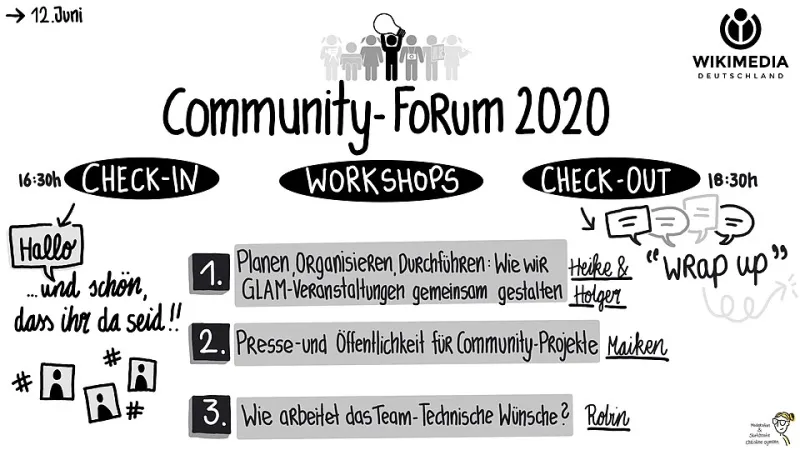
Photo: Christine Oymann für Wikimedia Deutschland e. V., CC BY-SA 4.0, via Wikimedia Commons
There's a specific kind of frustration that every active online community member knows intimately. You stumble into a thread that's actually going somewhere — genuine disagreement, fresh perspectives, people building on each other's ideas in real time. You bookmark it, mentally promise yourself you'll come back with a thoughtful response, and then life happens. By the time you return, the conversation is cold. The platform has already moved on. That thread is now a digital artifact, sealed off and slowly sinking toward irrelevance.
This isn't bad luck. It's design — and it's worth getting mad about.
The 48-Hour Window Nobody Talks About
Most major platforms — Reddit, Facebook Groups, even Slack workspaces — are quietly optimized around a brutal timeline. Algorithmic ranking systems are tuned to surface new content, which means anything older than a day or two gets systematically deprioritized. The recency bias isn't just a quirk; it's a core feature of how engagement-driven platforms stay sticky.
Researchers who study online discourse have noted that the average discussion thread on a mainstream social platform sees roughly 80% of its total engagement within the first 24 hours of being posted. After 48 hours, that number climbs toward 95%. In other words, if you weren't in the room when the conversation started, you were almost certainly never in the room at all.
For casual chit-chat, that's fine. For the kind of nuanced, substantive conversations that actually change how you think about something? It's a disaster.
Why Meaningful Conversations Need More Time
Here's the thing about genuinely rich discussions — they don't happen in a single sitting. The best intellectual exchanges, the ones that shift your perspective or introduce you to someone whose thinking you end up respecting for years, tend to develop in layers. Someone posts an idea. Another person pushes back. A third reframes the whole question. Someone else links in a piece of context that reorients the entire thread.
That process takes time. Real time. Not algorithm time.
Consider how this works offline. The best conversations at a dinner party or a neighborhood block party don't wrap up neatly in an hour. They get picked back up the next day, referenced weeks later, built upon in ways nobody anticipated. The platform equivalent of that — a thread that stays alive, invites new voices, and deepens rather than repeats itself — is genuinely rare online. But it exists. And the communities that cultivate it are doing something very specific.
The Notification Trap
One of the sneakiest killers of long-form discussion is notification fatigue. When a platform pings you every time someone replies to a thread, you train yourself to respond quickly and move on. The conversation becomes reactive rather than reflective. You dash off a sentence, get your little dopamine hit, and forget about it entirely.
This is especially punishing in large group chats and sprawling community forums where the notification volume is genuinely overwhelming. Most Americans who participate in more than two or three online communities have either muted nearly everything or developed a hair-trigger habit of dismissing alerts without reading them. Either way, the result is the same: conversations that deserved sustained attention get the same treatment as spam.
Communities that solve for this tend to do it through deliberate notification architecture — giving members granular control over what alerts they actually receive, and building in features that distinguish between "someone replied to your comment" and "this thread you care about just got really interesting."
What Human Moderation Actually Does for a Conversation
Here's where the difference between platform-managed and community-managed spaces becomes starkly visible. On most algorithmically driven platforms, moderation is primarily about removal — taking down content that violates rules. In intentionally built communities, moderation is something closer to curation and cultivation.
Good human moderators do things no algorithm can replicate. They notice when a conversation is getting genuinely interesting and pin it, highlight it, or explicitly invite more voices into it. They reach out directly to members whose perspectives would add something to an ongoing thread. They summarize where a long discussion has been so newcomers can jump in without reading 200 replies. They reopen threads that closed prematurely and redirect related conversations so they build on each other instead of fragmenting.
This is labor-intensive work. It's also the single biggest factor separating communities where conversations have a long, rich life from communities where everything dies on a Tuesday.
Structural Choices That Keep Threads Breathing
Beyond moderation, there are specific design and structural choices that thriving communities use to fight thread decay:
Threaded replies with clear timestamps. When a platform surfaces when something was said in a way that's easy to parse, members feel less pressure to respond immediately. They can join a thread that's a week old without feeling like they're shouting into a void.
Weekly or monthly digests. Some of the most durable online communities — especially those built around professional networking or niche interests — send curated recaps that resurface the best ongoing conversations. This actively pulls members back into threads they would have otherwise forgotten.
Explicit "slow conversation" spaces. A growing number of intentional communities are building separate channels or forums specifically designated for discussions that are meant to unfold over days or weeks. The cultural signal alone — this is a space for depth, not speed — changes how members engage.
Conversation tagging and search. When old threads are easily discoverable, they don't really die — they become a living archive that new members can enter, revive, and extend. This requires thoughtful tagging practices and a search function that actually works, which is a higher bar than it sounds.
The Real Cost of Conversations That Disappear
When meaningful discussions consistently evaporate before they can fully develop, communities lose something harder to quantify than engagement metrics. They lose institutional memory. They lose the sense that participating in a conversation actually matters — that what you said last Tuesday is part of something ongoing rather than a message in a bottle that nobody read.
Over time, that erosion changes member behavior. People stop investing in long, thoughtful replies because experience has taught them those replies won't land anywhere. The quality of discourse drops. The community starts to feel shallower than it used to, even if the activity numbers stay the same.
The antidote isn't a feature update. It's a philosophy — a genuine commitment to treating conversations as things worth preserving, tending, and returning to. Communities that operate that way don't just retain members longer. They build the kind of trust and depth that makes people actually want to show up.
And in an era when most of our online talk is optimized for speed and volume, that's a genuinely radical thing to offer.